Flame Cutting vs. Plasma Cutting: Key Differences in Thick and Thin Plate Applications
In the metal fabrication industry, cutting processes are the cornerstone of production, with flame cutting and plasma cutting standing out as two of the most widely used technologies. However, their performance varies significantly when applied to thick and thin metal plates, making the selection of the right method critical for efficiency, cost-effectiveness, and product quality. This article delves into the core differences between the two processes and their suitability for different plate thicknesses.
1. Fundamental Principles: The Core of Two Cutting Technologies
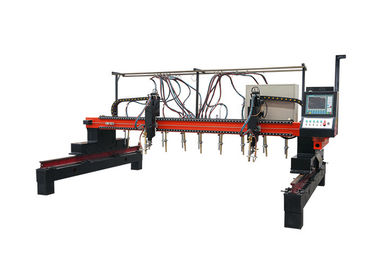
To understand their differences, it is essential to first grasp how each cutting method works. Flame cutting, also known as oxy-fuel cutting, relies on the combustion of a fuel gas (typically acetylene or propane) combined with oxygen. The process involves preheating the metal to its ignition temperature (around 870°C for steel) before a jet of pure oxygen is directed at the heated area, causing the metal to oxidize and melt. The molten oxide is then blown away, forming a cut.
In contrast, plasma cutting uses a high-velocity jet of ionized gas (plasma) generated by passing an electric arc through a gas (such as argon, nitrogen, or compressed air). The plasma, which reaches temperatures of up to 30,000°C—far higher than the melting point of most metals—melts the metal instantly. A secondary gas flow then removes the molten metal, creating a precise cut. Unlike flame cutting, plasma cutting does not require the metal to be preheated and can cut non-ferrous metals (e.g., aluminum, copper) that are not reactive with oxygen.
2. Thick Plate Applications: Flame Cutting Takes the Lead
When it comes to cutting thick metal plates (generally defined as plates thicker than 20mm), flame cutting is often the preferred choice. One of the primary advantages of flame cutting in this scenario is its ability to handle extreme thicknesses—some advanced flame cutting systems can cut plates up to 300mm thick. This is because the oxy-fuel combustion process generates a large, concentrated heat zone that can penetrate thick metal layers effectively.
Cost-effectiveness is another key factor for thick plate applications. Fuel gases and oxygen are relatively inexpensive compared to the gases and electricity required for plasma cutting, especially for large-volume cutting tasks. Additionally, flame cutting equipment for thick plates is often more durable and requires less maintenance than high-power plasma systems, further reducing operational costs.
However, flame cutting has limitations in thick plate precision. The large heat-affected zone (HAZ) can cause warping or distortion in the metal, and the cut edges may be rougher compared to plasma cutting. This means that post-cut finishing (such as grinding) may be necessary for applications requiring high precision.
3. Thin Plate Applications: Plasma Cutting’s Precision Shines
For thin metal plates (typically less than 10mm thick), plasma cutting outperforms flame cutting in almost every aspect. The most significant advantage is its precision: plasma cutting produces a narrow kerf (the width of the cut) and a small heat-affected zone, minimizing metal distortion—a critical factor for thin plates that are prone to warping under high heat.
Speed is another major benefit of plasma cutting for thin plates. Since there is no preheating step, plasma cutting can start cutting immediately, reducing cycle times. For example, cutting a 3mm steel plate with plasma can be up to three times faster than flame cutting. Additionally, plasma cutting leaves cleaner, smoother edges, eliminating the need for extensive post-processing.
Flame cutting, on the other hand, struggles with thin plates. The preheating step can easily overheat the thin metal, leading to excessive warping or even melting of the entire plate. The wide kerf of flame cutting also results in more material waste, which is uneconomical for thin plate production.
4. Other Key Considerations: Material Type and Operational Requirements
Beyond plate thickness, the type of metal being cut is a crucial factor. Flame cutting is only effective for ferrous metals (e.g., steel, cast iron) that can be oxidized. Non-ferrous metals, which do not react with oxygen, cannot be cut with flame cutting but are easily handled by plasma cutting.
Operational requirements also play a role in selection. Plasma cutting requires a power source and compressed gas, making it more suitable for indoor or controlled environments. Flame cutting, while also requiring gas storage, is more portable in some cases, making it a better choice for on-site construction or outdoor projects.
5. Conclusion: Matching the Cutting Method to the Application
In summary, the choice between flame cutting and plasma cutting hinges on plate thickness, material type, and project requirements. Flame cutting is ideal for thick ferrous plates, offering cost-effectiveness and high thickness capacity, while plasma cutting excels in thin plate applications, providing precision, speed, and versatility with non-ferrous metals. By understanding these key differences, metal fabricators can optimize their processes, improve product quality, and reduce costs.
Industry experts advise that for businesses handling a mix of thick and thin plates, investing in hybrid cutting systems that combine both technologies may be a viable long-term solution, ensuring flexibility across a wide range of applications.


 Your message must be between 20-3,000 characters!