Why High Definition Plasma Cutting Machines Excel in Stainless Steel and Aluminum Processing?
In the field of metal processing, stainless steel and aluminum are widely used in industries such as construction, automotive, aerospace, and electronics due to their unique properties—stainless steel boasts excellent corrosion resistance and durability, while aluminum is favored for its lightweight, high thermal conductivity, and recyclability. However, processing these two materials poses distinct challenges due to their physical and chemical characteristics. Among various cutting technologies, high definition plasma cutting machines have emerged as the preferred choice for stainless steel and aluminum processing. This news delves into the core reasons behind this preference, exploring how high definition plasma cutting technology addresses the pain points of processing these materials and delivers superior performance.
1. Inherent Challenges of Stainless Steel and Aluminum Processing
1.1 Unique Properties of Stainless Steel That Hinder Cutting
Stainless steel contains high levels of chromium and nickel, which form a dense oxide film on its surface, giving it excellent corrosion resistance. However, this oxide film also brings significant challenges to cutting. The oxide film has high melting point and thermal stability, making it difficult to melt and remove during cutting. Additionally, stainless steel has good thermal conductivity and toughness, which can easily lead to problems such as excessive heat-affected zones (HAZ), warping, and burrs during traditional cutting processes. Moreover, low-carbon stainless steel is prone to intergranular corrosion if heated improperly, which impairs the material's performance and service life.
1.2 Cutting Difficulties Posed by Aluminum's Characteristics
Aluminum's unique properties also make it a tricky material to process. As a lightweight metal, aluminum has an extremely high thermal conductivity—far higher than that of steel—meaning heat generated during cutting is quickly dissipated throughout the material. This makes it difficult to concentrate heat at the cutting point, affecting the melting efficiency. Furthermore, aluminum has a low melting point and high viscosity of molten metal, which can easily cause molten metal to adhere to the cutting edge, forming burrs or dross that are hard to remove. Aluminum's oxide film (alumina) is also a problem; it has a melting point of over 2000°C, much higher than aluminum's melting point of 660°C, and can block the cutting process if not effectively handled.
2. Core Advantages of High Definition Plasma Cutting Machines for Stainless Steel and Aluminum
2.1 Precise Heat Control to Minimize Heat-Affected Zones
One of the key advantages of high definition plasma cutting machines is their ability to control heat input precisely. Unlike traditional plasma cutting or flame cutting, high definition plasma systems use a narrower, more concentrated plasma arc with higher energy density. This allows the cutting process to focus heat directly on the cutting path, minimizing the heat-affected zone (HAZ) around the cut edge. For stainless steel, this precise heat control prevents intergranular corrosion and reduces material warping, ensuring the structural integrity and corrosion resistance of the processed parts. For aluminum, it avoids excessive heat dissipation and ensures that the cutting area melts sufficiently without affecting the surrounding material's properties.
2.2 High Cutting Speed and Efficiency for Thin to Medium Thickness Materials
High definition plasma cutting machines offer significantly higher cutting speeds compared to other technologies like waterjet cutting or laser cutting (for medium-thickness materials). Stainless steel and aluminum are often used in thin to medium thicknesses (up to 50mm for stainless steel and 30mm for aluminum) in industrial applications, and high definition plasma cutting excels in this range. The high-energy plasma arc can quickly melt and blow away the molten metal, reducing cutting time and improving production efficiency. For example, when cutting 10mm thick stainless steel, a high definition plasma cutting machine can achieve a speed of 2-3 meters per minute, which is much faster than waterjet cutting and comparable to laser cutting but at a lower cost.
2.3 Excellent Cutting Quality with Smooth Edges and Minimal Dross
High definition plasma cutting technology delivers superior cutting quality, which is crucial for stainless steel and aluminum processing. The narrow plasma arc ensures a narrow kerf width (as small as 1-2mm), resulting in precise dimensional accuracy. For stainless steel, the smooth cut edges eliminate the need for extensive post-processing (such as grinding or polishing), which is essential for maintaining the material's corrosion resistance—excessive post-processing can damage the oxide film. For aluminum, the high-velocity plasma gas effectively blows away the molten aluminum and oxide film, minimizing dross formation on the cut edge. This reduces the time and cost associated with post-cut cleaning, making the process more efficient.
2.4 Compatibility with the Oxide Films of Stainless Steel and Aluminum
High definition plasma cutting machines are designed to handle the oxide films on stainless steel and aluminum surfaces effectively. The high-temperature plasma arc (reaching 20,000-30,000°C) can quickly melt the high-melting-point oxide films, while the high-velocity plasma gas (usually nitrogen, argon, or a mixture) blows the molten oxide and metal away from the cutting path. This avoids the problem of oxide film blocking the cutting process, which is common in traditional cutting methods. For stainless steel, using nitrogen as the plasma gas also helps to form a passive oxide film on the cut edge, further enhancing corrosion resistance. For aluminum, the use of argon-hydrogen mixtures can improve the cutting quality by reducing oxidation and dross.
3. Cost-Effectiveness: A Practical Advantage for Mass Production
Compared to laser cutting machines, which are also capable of cutting stainless steel and aluminum with high precision, high definition plasma cutting machines offer significant cost advantages. Laser cutting machines require expensive lasers and optics, and their operating costs (including energy consumption and maintenance) are higher. In contrast, high definition plasma cutting machines have lower initial investment and operating costs, making them more suitable for small and medium-sized enterprises or mass production scenarios. Additionally, high definition plasma cutting machines have lower maintenance requirements and longer service life, further reducing the total cost of ownership. For industries that use large quantities of stainless steel and aluminum, such as construction and automotive parts manufacturing, this cost-effectiveness is a key factor in choosing high definition plasma cutting.
4. Versatility and Adaptability to Diverse Processing Needs
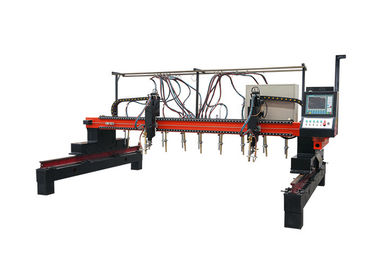
High definition plasma cutting machines are highly versatile, capable of processing not only stainless steel and aluminum but also other metals such as carbon steel. This versatility makes them a valuable asset for workshops that handle multiple materials. Moreover, modern high definition plasma cutting machines are equipped with CNC systems, allowing for precise cutting of complex shapes, holes, and patterns. This adaptability meets the diverse processing needs of stainless steel and aluminum products, such as stainless steel decorative panels, aluminum automotive parts, and aerospace components. Whether it's straight-line cutting, contour cutting, or bevel cutting, high definition plasma cutting machines can deliver consistent and high-quality results.
5. Industry Applications Validating the Superiority of High Definition Plasma Cutting
5.1 Applications in the Stainless Steel Industry
In the stainless steel industry, high definition plasma cutting machines are widely used in the production of stainless steel sheets, pipes, and structural components. For example, in the construction of food processing plants, high definition plasma cutting is used to cut stainless steel panels for equipment and pipelines, ensuring smooth edges and corrosion resistance. In the marine industry, it is used to process stainless steel hull components, where precision and durability are critical.
5.2 Applications in the Aluminum Industry
In the aluminum industry, high definition plasma cutting machines play a key role in the production of aluminum automotive parts (such as body panels and engine components), aluminum alloy doors and windows, and aerospace aluminum components. For new energy vehicles, which use a large amount of aluminum to reduce weight, high definition plasma cutting ensures efficient and precise processing of aluminum parts, contributing to the vehicle's lightweight design and energy efficiency.
6. Future Developments: Enhancing Performance for Stainless Steel and Aluminum
Industry experts predict that high definition plasma cutting technology will continue to evolve to better meet the processing needs of stainless steel and aluminum. Future developments will focus on improving cutting precision for thicker materials, reducing heat input further, and integrating intelligent technologies such as real-time monitoring and automatic parameter adjustment. These advancements will make high definition plasma cutting machines even more efficient and reliable, expanding their applications in high-end stainless steel and aluminum processing, such as in the aerospace and medical device industries.
In conclusion, high definition plasma cutting machines are more suitable for stainless steel and aluminum processing due to their precise heat control, high cutting quality, efficiency, cost-effectiveness, and ability to handle the unique challenges posed by these materials. As industries continue to demand higher quality and more efficient metal processing, high definition plasma cutting technology will remain a key driver in the stainless steel and aluminum processing sectors, supporting the development of various high-tech industries.


 Your message must be between 20-3,000 characters!